

Breathable Fabrics That Keep You Comfortable All Day
Last Updated: November 1, 2026
Quick Summary
The best breathable fabrics for all-day comfort are linen and lightweight cotton, with bamboo and lyocell close behind. Linen's loose weave allows strong air circulation and dries fast, while lightweight cotton is softer and easier to care for. For exercise, choose engineered wicking synthetics or fine merino rather than standard nylon.
- A 120-150 gsm cotton tee breathes very differently from a 220 gsm one.
- Hold fabric up to the light: a faint glow means air will move through it.
- In humidity, favour lighter weights and open weaves such as loose linen or lyocell.
- Avoid fabric softener, which can coat fibres and reduce moisture management.
- Standard nylon is not breathable unless engineered with mesh or a wicking finish.
Table of Contents
- What Makes a Fabric Breathable
- A Quick Comparison of Breathable Fabrics
- The Best Fabrics for Hot Weather and Summer Days
- Cotton vs Linen Breathability: Which Wins
- Fabrics That Absorb Sweat Without Feeling Damp
- Is Nylon Breathable? What to Know Before You Buy
- Plant-Based and Regenerated Fibres Worth Trying
- Choosing Breathable Pieces for Your Everyday Wardrobe
- Frequently Asked Questions
What Makes a Fabric Breathable
Breathability comes down to how easily air and moisture vapour pass through a fabric, and how quickly that fabric moves sweat away from your skin. At The Fine Girl Boutique, we explain it to customers this way: a breathable fabric lets heat escape instead of trapping it, so you stay comfortable rather than clammy. The best breathable fabrics balance airflow with moisture management, which is why a thin cotton tee can feel cooler than a thicker synthetic top of the same weight.
UK Health and Safety Executive guidance on thermal comfort describes thermal comfort as a combination of air temperature, humidity, airflow and clothing, which is exactly the mix that fabric choice influences.
Fibre, Weave and Weight: The Three Levers
Three things decide how breathable a garment feels. Fibre sets the baseline: natural fibres like cotton and linen absorb moisture, while synthetics tend to wick it. Weave controls airflow: a loose, open weave lets air circulate, while a tight one blocks it. Weight determines warmth: a lightweight fabric sits cooler against the skin than a heavy knit.
The interplay matters more than any single factor. A lightweight, open-weave linen shirt will out-breathe a heavy cotton one every time. A waffle knit, by contrast, traps more air in its texture, which makes it cosier rather than cooler. For a closer look at how knit structure changes comfort in a specific garment, our guide to the women's waffle jumper covers style, fit and care in detail.
A Quick Comparison of Breathable Fabrics
Here is how the main contenders stack up on the factors that matter most for all-day comfort.
| Fabric | Airflow | Moisture Absorption | Drying Speed | Skin Feel | Best For |
|---|---|---|---|---|---|
| Linen | Excellent | High | Fast | Crisp, slightly textured | Hot, humid days; loose shirts and trousers |
| Cotton (lightweight) | Good | High | Moderate | Soft, familiar | Everyday tees, shirts and bedding |
| Cotton (heavy) | Fair | High | Slow | Soft but substantial | Cooler evenings, not peak heat |
| Bamboo viscose | Good | High | Moderate | Very soft, drapey | Loungewear, sensitive skin |
| Lyocell (Tencel) | Good | High | Fast | Cool, smooth | Sensitive skin, humid commuting |
| Modal | Good | High | Moderate | Silky, smooth | Underwear, base layers |
| Merino wool (fine gauge) | Moderate | High | Moderate | Soft, not itchy in fine gauges | Temperature regulation across the day |
| Silk | Moderate | Moderate | Moderate | Slippery, cool | Lightweight layering |
| Nylon (standard) | Low | Low | Fast | Smooth, clammy when hot | Activewear only, with ventilation |
| Polyester (engineered wicking) | Moderate | Low | Very fast | Smooth | Exercise and quick-dry needs |
The pattern is clear: plant-based and natural fibres generally win on breathability and moisture absorption, while synthetics win on drying time. But the properties are not interchangeable, and that is where most buying mistakes happen.
Airflow versus absorption. A fabric can let air through without absorbing much sweat (standard nylon mesh), or absorb sweat well without drying quickly (heavy cotton). For all-day comfort you want both reasonable airflow and reasonable moisture release.
Drying speed in practice. A lightweight linen shirt generally dries more quickly than a heavy cotton tee. Engineered polyester dries fastest of all but feels clammy once saturated if airflow is poor.
Weight changes everything. A 120-150 gsm cotton tee breathes very differently from a 220 gsm one.
Blends are not automatically worse. A cotton-linen blend often combines linen's airflow with cotton's softness and lower creasing. A small percentage of elastane improves fit but slightly reduces breathability, so keep it low for hot-weather pieces.
The Best Fabrics for Hot Weather and Summer Days
Linen and lightweight cotton are the best fabrics for hot weather, with bamboo and lyocell close behind. Linen's loose weave allows strong air circulation, and its fibre absorbs moisture without clinging. Cotton is softer against the skin and easier to care for, which is why it dominates summer clothing.
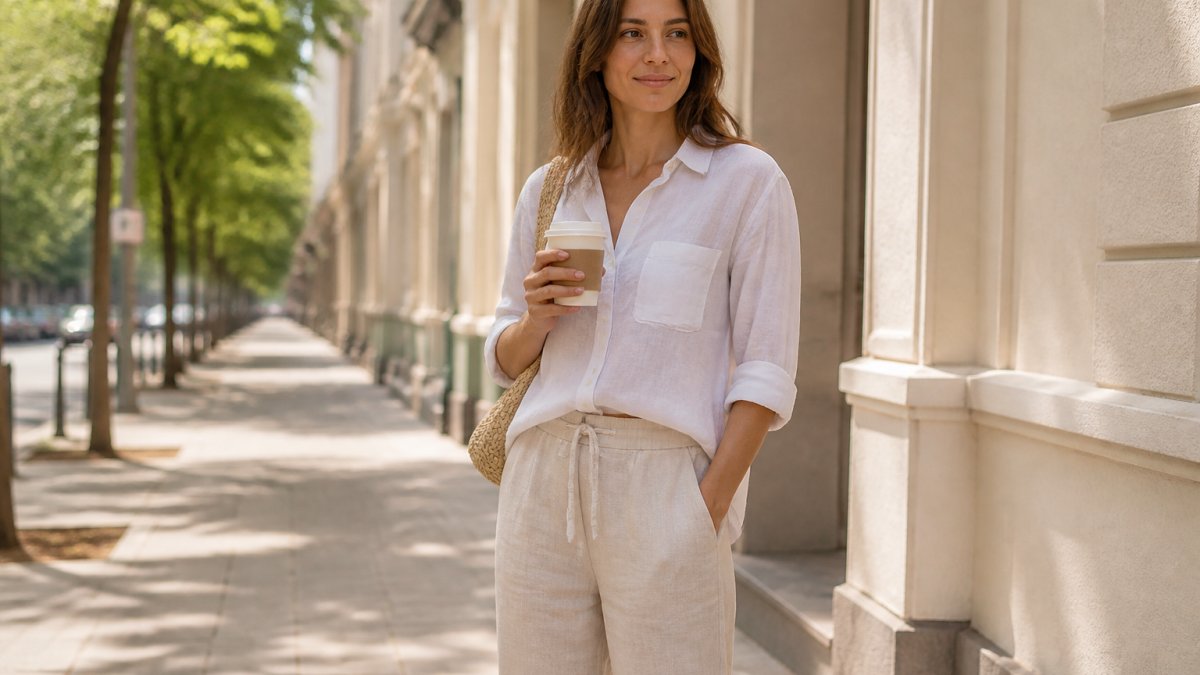
For warm weather, look for:
- Linen for maximum airflow on still, humid days
- Lightweight cotton for everyday shirts and T-shirts
- Bamboo and lyocell when you want softness and drape
- Merino wool in fine gauges for temperature regulation that works across the day
Layering helps too. A loose linen shirt over a cotton tee gives you airflow plus absorbency, and you can shed a layer as the temperature climbs. Watch out: dark colours absorb more heat in direct sun, so lighter tones genuinely feel cooler outdoors.
Cotton vs Linen Breathability: Which Wins
Linen wins on pure breathability, but cotton wins on comfort and versatility. Linen's longer fibres and open weave let more air through, and the fabric dries faster. Cotton absorbs moisture well but holds it longer, so a heavy cotton tee can feel damp after activity.
Textile Institute resources on natural fibre properties notes that linen's structure gives it natural strength and airflow advantages over shorter cotton fibres. In practice, this means linen is the better choice for a heatwave, while cotton is the better choice for daily wear you will wash often.
A common mistake is buying cotton that is too heavy. A mid-weight cotton tee breathes well; a thick one does not. Check the fabric weight and hold it up to the light: if you can see through it slightly, air will move through it too.
Fabrics That Absorb Sweat Without Feeling Damp
The fabrics that absorb sweat without feeling damp are those that combine high moisture absorption with fast drying: linen, lyocell and fine merino wool lead here. Cotton absorbs moisture well, though it can take longer to dry.
Humid weather. When the air is already moist, evaporation is slow, so absorbent fibres can stay damp for longer. In humidity, favour lighter weights and open weaves: a loose linen shirt or a lyocell top dries noticeably faster than a heavy cotton tee.
Dry heat. Evaporation is fast, so cotton and linen perform well and feel comfortable. Lightweight cotton is the most forgiving everyday choice here because it absorbs sweat and releases it quickly in dry air.
Exercise and commuting. For sustained activity, fine merino wool is a commonly chosen option for moisture and temperature management. Engineered wicking synthetics dry fastest but should be chosen with ventilation panels or mesh.
Indoor and overnight wear. For bedding and loungewear, breathability matters as much as absorption. Cotton and linen bedding lets heat escape, while bamboo viscose and modal feel soft and drape well.
Practical checks before you buy. Look for fabric weight on the label (lighter generally breathes better), feel for openness in the weave, and prefer relaxed fits for airflow. Wash gently and avoid fabric softener, which can coat fibres and reduce their ability to manage moisture over time.
Is Nylon Breathable? What to Know Before You Buy
Standard nylon is not breathable. Its fibres are smooth and non-absorbent, so it traps heat and moisture unless the fabric is specifically engineered with ventilation or a wicking finish. That is why basic nylon feels clammy after activity.
Engineered synthetics change the picture. Some nylon fabrics use mesh structures or moisture-wicking treatments that improve airflow and drying time. The label matters: look for terms like "breathable mesh", "moisture-wicking" or "ventilated panels" rather than assuming all nylon performs the same.
Plant-Based and Regenerated Fibres Worth Trying
Bamboo, viscose, modal and lyocell are the plant-based and regenerated fibres worth trying, and each behaves differently. Bamboo viscose is soft, drapes well and absorbs moisture effectively. Modal is similar but smoother and more durable. Lyocell, sold under the Tencel name, has a cool, smooth skin feel.
WRAP UK guidance on sustainable textiles highlights how fibre choice and care affect a garment's environmental footprint, which is worth weighing alongside comfort.
These fibres suit sensitive skin well because they feel smooth and resist clinging. They also layer neatly under heavier pieces. The trade-off is care: some regenerated fibres need gentler washing to hold their shape, so check the label before you buy.
Choosing Breathable Pieces for Your Everyday Wardrobe
Build your everyday wardrobe around breathable fabrics you will actually reach for: cotton tees, linen shirts, lyocell tops and lightweight knits. Start with the pieces you wear most, then layer in breathable options for warmer days.
If you are building from scratch, a checklist helps. Our guide to the essential wardrobe items every woman needs gives you a practical foundation to work from. For a coordinated approach, this capsule loungewear guide shows how to choose pieces that work together. When you are ready to add a breathable cotton tee you can wear daily, our Fine Girl T-shirt is a soft, lightweight option, and our round-up of the best loungewear for daily confidence covers the pieces that earn their place.

A few practical rules we would follow:
- Choose natural or regenerated fibres for anything worn against the skin all day
- Check fabric weight: lighter breathes better
- Prefer loose weaves and relaxed fits for airflow
- Wash gently to protect shape and softness
Our Luxe T-shirt is made from a soft cotton blend and is designed for comfortable everyday wear.

Frequently Asked Questions
What is the best fabric to wear in very hot weather?
Linen and lightweight cotton are the strongest choices for very hot weather because they let air move through the cloth and release moisture quickly. Linen has a slightly open weave that encourages airflow, while cotton feels softer against the skin. For humid days, a loose cotton or linen blend in a light colour works well. Avoid tightly woven synthetics next to the skin, since they trap heat and slow drying.
Is cotton or linen more breathable?
Linen usually edges ahead on airflow because its fibres are longer and the weave is more open, so air passes through more freely. Cotton is close behind and feels softer, which many people prefer for all-day wear. In practice, a lightweight cotton vs linen breathability difference is small; fabric weight and weave matter as much as the fibre itself. Both dry faster than most synthetics.
What fabrics absorb the most sweat?
Fabrics that absorb sweat well include cotton, linen, bamboo viscose and modal. These plant-based fibres pull moisture away from the skin and hold it in the cloth, which keeps you feeling drier for longer. Merino wool also absorbs moisture effectively without feeling clammy. Pure polyester and nylon absorb very little, so sweat sits on the surface unless the fabric has been specially treated.
Is nylon breathable?
Standard nylon is not very breathable. It is a tightly woven synthetic that traps heat and holds moisture against the skin, which is why it feels sticky on warm days. Some outdoor and sportswear nylons are engineered with mesh panels or micro-perforations to improve airflow, but everyday nylon clothing rarely has these. For all-day comfort in warm conditions, plant-based breathable fabrics are a safer bet.
Does fabric weave affect breathability?
Yes, weave matters as much as fibre. An open weave such as linen's plain weave lets air circulate freely, while a tight weave blocks it. Knits generally stretch and move with you but can be denser than expected. Fabric weight also plays a part: a lightweight cotton voile breathes far better than a heavy cotton twill, even though both are cotton. Check the label and feel the cloth before buying.
Choosing breathable fabrics is really about matching fibre, weave and weight to how you actually live, not chasing a single "best" material. If you want comfortable, purposeful pieces that keep you cool and confident all day, we can help. Get started with The Fine Girl Boutique and build a wardrobe that feels as good as it looks, with breathable cotton-blend tees, cosy tracksuits and empowering designs made for everyday wear.
