

7 Habits That Keep Black Loungewear From Fading Fast
Last Updated: 5 November 2026
Quick Summary
To keep black loungewear from fading quickly, wash it inside out in cold water at 30°C or below on a gentle cycle with a mild, colour-safe detergent, then air-dry it away from direct sunlight. Wash every two to three wears rather than after each wear, and air garments between washes to cut dye loss from heat and friction.
- Wash loungewear every two to three wears, not after every wear, to limit dye loss.
- Turn garments inside out before washing to protect the outer surface from friction.
- Skip fabric softener, bleach and harsh stain removers, which dull or strip black fabric.
- Air-dry inside out away from radiators and direct sun, as UV light fades dye.
- Wash black items as their own load, away from towels and fleece, to avoid lint and dye transfer.
Table of Contents
- Why Black Loungewear Fades: What Actually Happens in the Wash
- How Often to Wash Loungewear (and How to Freshen It Between Washes)
- How to Wash Black Clothes Without Fading
- The Best Detergent for Black Clothes (and How Much to Use)
- How to Air-Dry Black Clothes Without Sun Damage
- Tackling Odour, Sweat and Stains Without Stripping the Colour
- Troubleshooting Fading, Dye Transfer, Lint and Detergent Residue
- Building a Wash Routine That Protects Your Fine Girl Sets
- Frequently Asked Questions
Why Black Loungewear Fades: What Actually Happens in the Wash
Black dye sits on the surface of fabric fibres as much as inside them.
A common mistake is blaming cheap dye alone. In practice, the washing machine does more damage than the dye ever does.
Three things drive colour loss:
- Agitation: tumbling against other garments rubs dye off the surface
- Heat: warm water opens fabric fibres and releases dye faster
- Chemistry: strong detergent and bleach strip colour along with dirt
The UK care labelling guidance from the Department for Business and Trade explains what the symbols on your care label actually mean.
Black loungewear fades quickly because soft cotton-blend fabrics have a brushed, open surface. That surface releases dye easily.
If you are weighing up whether better-made pieces last longer, our guide to whether premium loungewear is worth the price breaks down what you are actually paying for.
How Often to Wash Loungewear (and How to Freshen It Between Washes)
Wash loungewear every two to three wears, not after every wear. Overwashing is the fastest route to faded black clothes. Less frequent washing means less dye loss, less friction and less heat exposure. But "wash less" is only half the advice. The other half is knowing how to freshen a garment so it genuinely does not need the machine yet.
A practical freshening routine between washes
- Air immediately after wearing. Hang the garment on a wide-shouldered hanger in a well-ventilated room, away from direct sunlight. Give it at least a few hours, ideally overnight. This evaporates sweat and disperses surface odour.
- Check the underarms, cuffs and waistband. These are the areas that hold odour and transfer dye first. If they smell stale after airing, spot-clean rather than washing the whole piece.
- Spot-clean marks with cool water and a mild detergent. Dab, do not rub. Work from the inside out so you do not push the mark deeper into the fabric. Rinse the area with clean cool water and blot dry with a white towel.
- Use a fabric freshener sparingly, and check it is colour-safe. Many fresheners contain alcohol or fragrance that can dull black over time. A light mist from 20-30 cm away is enough; do not saturate the fabric.
- Turn the garment inside out before airing. This exposes the inner surface to air and keeps dust and lint off the outer face.
Decide when a full wash is actually necessary
A garment needs the machine when:
- It smells of sweat or body odour after airing
- There is a visible stain that spot-cleaning has not removed
- The fabric feels clammy or stiff
If none of those apply, airing and spot-cleaning will usually buy you another wear or two. That single habit protects colour more than any product on the shelf.
Frequency guide by garment
| Garment | Wash after | Freshen between washes |
|---|---|---|
| Hoodie | 3-4 wears | Air on a hanger overnight; spot-clean cuffs |
| Sweatpants | 2-3 wears | Air out; spot-clean marks at the knee and seat |
| T-shirt or base layer | 1-2 wears | Air, then wash |
| Brushed fleece or loopback set | 3-4 wears | Air inside out; avoid fabric freshener on the brushed face |
Watch out: do not use a hot iron or steamer to freshen loungewear between washes. Heat sets odour and can shrink elastane. If you need to smooth creases, use a cool iron on the reverse or hang the garment in a steamy bathroom instead.
How to Wash Black Clothes Without Fading
Wash black clothes inside out, in cold water, on a gentle cycle, with a mild detergent. Those four choices cover most of what keeps dark garments dark. Everything else is detail.
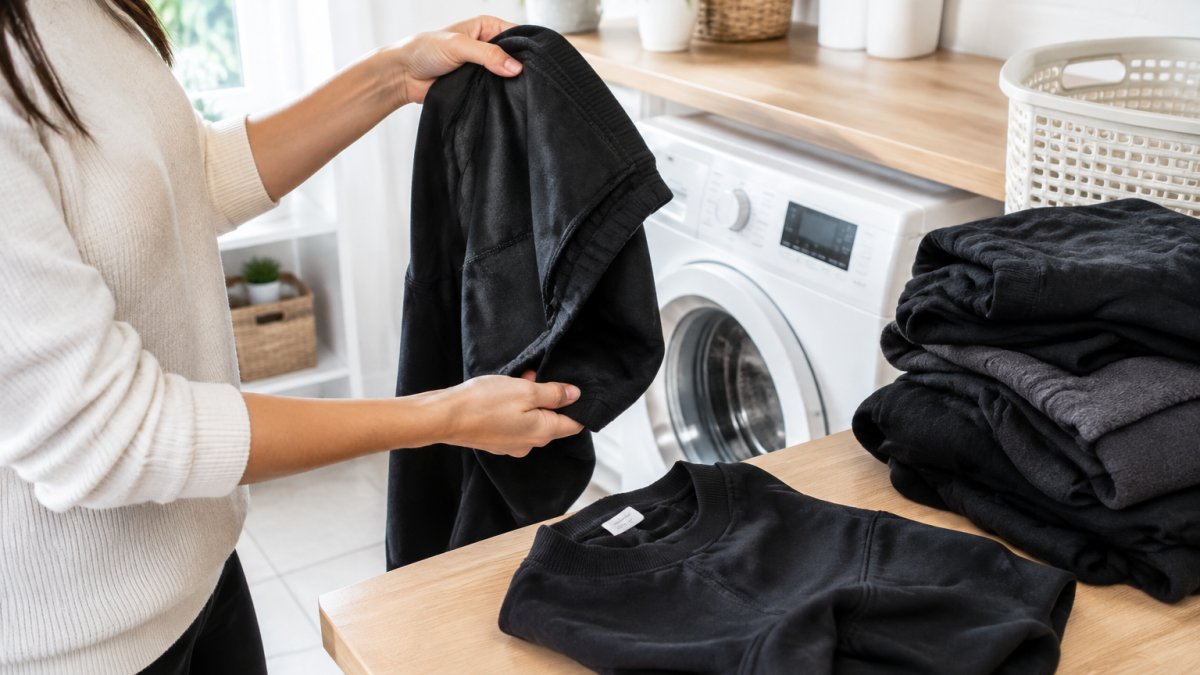
Turn Everything Inside Out and Separate Your Darks
Turning garments inside out protects the outer surface from friction. It is the single easiest step, and most people skip it.
Separate darks from lights and from lint-producing fabrics like towels. Black fabric picks up lint visibly, and light fibres show up immediately.
- Turn hoodies, sweatpants and tops inside out
- Zip zips and fasten drawstrings so they do not snag
- Wash black items together, away from towels and fleece
Choose a Gentle Cycle and a Cold Wash
A cold wash at 30°C or below keeps dye in the fabric. Hot water opens fibres and releases colour, and it does so permanently.
Use a gentle or delicate cycle to cut agitation. A lower spin speed reduces friction too.
Watch out: a fast spin cycle wrings fabric hard and speeds up surface wear. Drop the spin speed and let air do the rest.
The Best Detergent for Black Clothes (and How Much to Use)
The best detergent for black clothes is a mild, colour-safe liquid made for dark fabrics. It cleans without stripping dye, and it usually contains no optical brighteners, which leave a grey cast on black. But loungewear is rarely one fabric, and the right detergent depends on what the garment is made from.
Match the detergent to the fabric blend
- Cotton and cotton-rich blends: These tolerate mild liquid detergent well. Avoid powders that may not dissolve fully in a cold wash, as undissolved granules can leave white specks on black fabric.
- Polyester and polyester-cotton blends: These hold dye well but attract oil and odour. A liquid detergent with a small amount of enzyme works at low temperatures, but check the bottle for colour-safe wording.
- Viscose and modal: These fibres are weaker when wet, so use the gentlest formula you can and avoid anything labelled as a heavy-duty or biological stain remover.
Read the label for what is not there
Look for phrases such as "colour-safe", "for dark fabrics" or "no optical brighteners". Optical brighteners are fluorescent compounds that make white fabric look whiter; on black they create a dull, greyish haze that builds up over repeated washes. Also check for bleach or oxygen-based stain removers in the ingredient list if you are treating a whole load rather than a spot.
Dose by water hardness and load size
Dose matters as much as the product. Too much detergent leaves residue that dulls colour and traps lint. Too little in hard water leaves soil behind that abrades fibres.
The Fine Girl Pullover Hoodie and Sweatpant Set →
- Use the dose on the bottle for your water hardness and load size. Detergent brands often print a hard-water column on the back of the pack.
- Reduce the dose for small loads. A two-item wash does not need a full cap.
- For soft water areas, use the lower end of the recommended range.
A common mistake is adding extra detergent for a sweaty load. It does not clean better.
Watch out: if you switch from powder to liquid, run an empty hot maintenance wash first.
How to Air-Dry Black Clothes Without Sun Damage
Air-dry black clothes inside out, away from direct sunlight. UV light fades dye, and heat from a tumble dryer causes shrinkage and fabric wear.
Hang or lay flat in a well-ventilated room. Turn the garment inside out first so any sun exposure hits the inner surface.
- Avoid radiators and direct sun
- If you must use a tumble dryer, choose low heat and short cycles
- Reshape hoodies and sweatpants while damp
If you are thinking about which fabrics hold up best over time, our guide to breathable fabrics that stay comfortable all day covers what to look for.
Tackling Odour, Sweat and Stains Without Stripping the Colour
Spot-clean stains rather than washing the whole garment. A targeted treatment removes the mark without exposing the entire piece to another full wash cycle.
For sweat and odour, a cool soak with a mild detergent works well. Rinse thoroughly afterwards.
- Blot fresh stains, do not rub
- Treat marks from the inside out
- Use a soft cloth and cool water
Skip colour-restoring products on quality pieces. They can shift the finish unevenly. Keeping up with care beats trying to reverse damage later.
Keeping your sets fresh also makes them easier to style. Our guide to styling helping loungewear with confidence shows how to wear them well between washes.
Troubleshooting Fading, Dye Transfer, Lint and Detergent Residue
Most fading complaints trace back to one of four causes. Match the symptom to the fix.
| Problem | Likely cause | Fix |
|---|---|---|
| Overall dulling | Overwashing and warm water | Wash less, cold wash, gentle cycle |
| Patchy colour loss | Detergent residue or bleach contact | Reduce dose, avoid bleach entirely |
| Dye transfer | Mixed loads with lighter fabrics | Wash black separately |
| Lint and fluff | Towels or fleece in the same load | Separate lint-producing fabrics |
| Stiff patches | Too much detergent | Re-rinse with cool water |
Dye transfer is the one that catches people out. One light sock in a dark load can leave a grey mark on a black hoodie. Wash black garments as their own load and the problem disappears.
Building a Wash Routine That Protects Your Fine Girl Sets
A routine beats a one-off fix. Build your wash habits around the garments you actually wear most, and black stays black far longer.
The Fine Girl Pullover Hoodie and Sweatpant Set (£59.99) is a polyester and soft-cotton blend with a casual regular fit, and it benefits from everything above: cold wash, inside out, air-dry. The Fine Girl Zip-Through Hoodie and Sweatpants Set (£59.99) is 65% cotton and 35% polyester at 300gsm.
Here is a routine that suits these fabrics:
- Turn the set inside out before every wash
- Wash black sets together, away from towels
- Cold wash at 30°C on a gentle cycle
If you want to build a small, hard-working collection of pieces worth caring for, our guide to building a capsule loungewear wardrobe shows how to choose them. And when a set has earned its place in your rotation, you can browse the Fine Girl hoodie and sweatpant set to see the pieces this routine is built around.

Frequently Asked Questions
How do you stop black clothes from fading in the wash?
Wash black clothes less often and always in cold water on a gentle cycle. Turn garments inside out to reduce surface abrasion, separate darks from lights and lint-shedding fabrics, and use a mild detergent made for dark colours at the correct dose. Skip bleach entirely and air-dry away from direct sunlight. Together these habits slow dye loss and fabric friction, which are the two main reasons black loungewear starts looking grey.
What temperature should you wash black clothes at?
A cold wash of 30°C or lower is the safest choice for black loungewear. Heat opens up fabric fibres and speeds up dye loss, so hot washes and hot tumble drying both shorten the life of the colour. Check the care label first, then default to the coolest setting that still cleans the garment properly. For cotton-blend tracksuits, a cold, gentle cycle handles everyday sweat and odour without stressing the dye.
Is it better to air-dry black clothes?
Yes. Air-drying black clothes protects the colour far better than a tumble dryer. Heat exposure causes shrinkage and fabric wear, and the tumbling action adds abrasion. Hang or lay garments flat in a well-ventilated spot away from direct sunlight, because UV light fades dye over time. If you must use a dryer, choose the lowest heat setting and remove items while slightly damp.
Can vinegar stop black clothes from fading?
A diluted white vinegar rinse is a common home remedy and can help rinse out detergent residue, but it will not restore lost dye or permanently lock colour in. Treat it as a mild extra step rather than a fix. The habits that genuinely protect black loungewear are washing less frequently, using cold water, turning garments inside out and avoiding heat and direct sunlight during drying.
Fading is not inevitable. It is the result of small choices repeated every wash, and small changes fix it. At The Fine Girl Boutique, we design black loungewear sets with soft cotton-blend fabric, a relaxed flattering fit and the FINE GIRL emblem, so the pieces you care for properly keep looking sharp. Get started with The Fine Girl Boutique and keep your black sets looking new for longer.
